
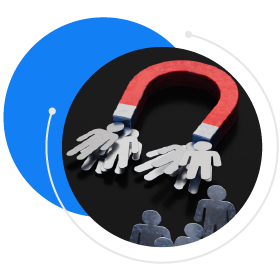
Social engineering is a cyberattack technique that consists of exploiting
people's natural tendency to trust, as well as with credibility and lack of
awareness. The goal is usually to obtain sensitive data from companies
or individuals.
Companies can invest in many different tools to protect themselves against
cybercrime, but the weakest point of an IT security system is usually the
human being. Social engineering experts are excellent psychologists, able
to manipulate the victim and use intelligent arguments and formulations.
Therefore, it is essential to be aware of the threats, importance and
value of data.
There are many techniques in social engineering. We highlight some of them here:
1. Phishing
The goal is to make the recipient of the email believe it's something they need
or are waiting for. The email may include dangerous links or attachments containing
antivirus software. Phishing types also include: spear phishing and whaling. Think
before you click!
2. Pretext
This technique uses a pretext - a false justification for a specific action - to gain confidence
and deceive the victim. For example, the attacker claims to work on IT support and requests
the target's password to perform maintenance.
Proper processes, policies, and identification and authentication training must be in place
to avoid these attacks.
3. Bait
The bait aims to attract the victim to perform a specific task, providing easy
access to something that the victim may feel tempted to access. For example, a USB
drive infected with a keylogger and identified as "Private Photos" left on the
victim's desk.
Security policies, such as blocking unauthorized software and hardware, will
prevent most attempts, and you may want to remind teams never to rely on unknown
sources.
4. Quid pro Quo
"Something for something" in Latin, involves a request for information in exchange for
compensation. This is the case of an attacker calling random phone numbers claiming
to be from technical support. Occasionally, he finds a victim he happened to need.
They offer "help", gaining access to the computer and being able to install malicious
software.
5. Shoulder Surfing
This method involves stealing data (passwords or codes) by looking "over the
shoulder" when the victim is using the laptop or other device (a smartphone
or even an ATM). Awareness of the threat is particularly important for companies
with employees in remote work, where they can use their work devices in public
places.
6. Tailgating
This method involves physical entry into protected areas, such as the headquarters
of a company. The attacker, can impersonate a collaborator and convince the victim,
who is an employee authorized to enter at the same time, to open the datacenter door
using the victim's RFID pass.
Access to non-public areas should be controlled by access policies and/or use of
access control technologies, the more sensitive the area, the stricter the
combination.
To prevent such attacks, there are several important
aspects to consider:
Training employees in social engineering
One of the most important aspects of social engineering prevention is risk awareness.
Therefore, it is essential to organise cybersecurity workshops for employees and pass
on the importance of data.
Testing employee awareness
Occasionally, it's a good idea to put employees in a real attack simulation situation.
Do they lock computers when they come out? Are there any important documents on your
desks? Credentials written in post-its? What will they do if an unknown number calls
and impersonates someone offering services the company is looking for? Answering these
questions will help ensure that everyone on the team is aware of what they can and
should not do. Do exercises with the management team and key employees on a regular
day. Test controls and reverse engineer potential areas of vulnerability.
Enhance multi-factor authentication
Even a strong password isn't always enough. It is best not to rely on single-factor authentication
for important data. In addition to passwords, multi-factor verification can include fingerprint
scanning, authentication tokens, or SMS codes.
Currently, the best defence against social engineering attacks
is the education of employees complemented with technological
solutions to better detect and respond to attacks. By being
fully aware of it, and taking basic precautions, you will be much
less likely to become a victim of social engineering.
Request submitted successfully. Check your email. Thanks!
Error - There was an error processing your order.
Cookie Consent X
Devoteam Cyber Trust S.A. uses cookies for analytical and more personalized information presentation purposes, based on your browsing habits and profile. For more detailed information, see our Cookie Policy.